
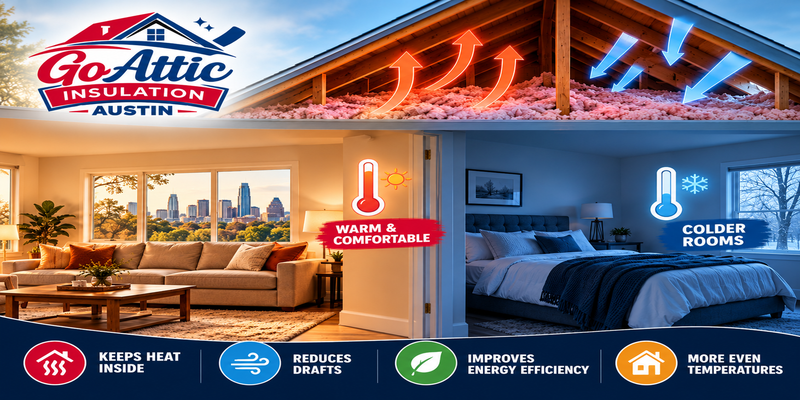
Have you ever noticed that your living room feels perfectly warm while your bedroom stays uncomfortably cold? Uneven indoor temperatures are a common frustration for homeowners during Austin winters. Although Central Texas is known for its hot summers, occasional cold fronts and freezing temperatures can quickly expose hidden problems with a home’s insulation and energy efficiency.
If certain rooms remain chilly even when your heating system is running, the problem may not be your thermostat. Inadequate attic insulation, hidden air leaks, and uneven heat distribution can all contribute to uncomfortable temperature differences. Understanding these issues can help Austin homeowners improve comfort, reduce unnecessary energy waste, and prepare their homes for colder weather.
1. Inadequate Attic Insulation Allows Heat to Escape
One of the most common reasons for uneven room temperatures is insufficient attic insulation. During winter, heat naturally moves from warmer areas toward colder areas. When your attic lacks adequate insulation, heat can escape through the ceiling, leaving rooms below feeling colder than expected.
Some sections of your attic may also have thinner or compressed insulation, creating temperature differences between rooms.
Common signs of inadequate attic insulation include:
- Bedrooms that remain colder than the rest of the house
- Heating systems running frequently during chilly nights
- Unusually high winter energy bills
- Noticeable temperature differences between rooms
- Rooms becoming cold shortly after the heating system turns off
Proper attic insulation in Austin, TX, helps slow heat transfer, supporting more consistent indoor temperatures during winter and improved cooling efficiency during summer.
2. Hidden Air Leaks Create Uncomfortable Drafts
Even a well-functioning heating system can struggle when warm indoor air escapes through gaps and openings.
Air leaks commonly develop around attic access doors, recessed lighting, plumbing penetrations, electrical wiring openings, and other unsealed spaces. During colder weather, these gaps can allow heated air to escape into the attic while drawing colder outdoor air into the home through other openings.
Rooms with more air leakage may feel significantly colder than nearby spaces.
Attic air sealing helps address these hidden openings, reducing unwanted airflow and improving the effectiveness of existing insulation. Combining proper air sealing with attic insulation can provide better results than relying on insulation alone.
3. Uneven HVAC Airflow Can Leave Certain Rooms Cold
Sometimes, the cause of cold rooms is related to your home’s heating and ventilation system.
Blocked air vents, poorly balanced ductwork, leaking ducts, or inadequate return airflow can prevent sufficient warm air from reaching certain areas of the house.
Bedrooms located farther from the heating system may receive less warm air, particularly if ductwork runs through an unconditioned attic.
A professional HVAC inspection can help identify airflow problems. If attic ductwork is exposed to cold temperatures or lacks proper insulation, improving its insulation and sealing may also help reduce heat loss.
4. Poorly Insulated Walls and Windows Increase Heat Loss
While attic insulation plays an important role in maintaining indoor comfort, windows, exterior walls, and doors can also contribute to uneven temperatures.
Rooms with large windows, exterior-facing walls, or poorly sealed doors may lose heat more quickly during winter.
For example, a bedroom with two exterior walls may feel colder than an interior room because it has more surfaces exposed to outdoor temperatures.
Improving window weatherstripping, sealing gaps around doors, and checking wall insulation can help limit unwanted heat loss. When combined with adequate attic insulation, these improvements can create a more comfortable living environment.
5. Damaged or Uneven Attic Insulation Reduces Winter Comfort
Attic insulation can become less effective when it is disturbed, compressed, displaced, or damaged by moisture and pests.
Common insulation problems include gaps between insulated areas, compressed fiberglass batts, uneven blown-in insulation, and wet insulation caused by roof leaks.
These conditions can create weak spots in your home’s thermal barrier, allowing certain rooms to lose heat faster than others.
Scheduling a professional attic insulation inspection can help identify areas that require repairs, additional insulation, or replacement. Addressing these problems early can improve year-round comfort and reduce avoidable heating and cooling demands.
How Can Austin Homeowners Fix Uneven Room Temperatures?
The best solution depends on where your home is losing heat and whether your heating system distributes warm air evenly.
Homeowners can start by inspecting visible attic insulation, checking for drafts, keeping supply vents unobstructed, and evaluating their home’s heating performance.
For long-term improvements, consider:
- Attic insulation installation: Add an appropriate amount of insulation to help minimize winter heat loss.
- Attic air sealing: Close hidden gaps that allow conditioned air to escape.
- Attic insulation replacement: Address insulation that is wet, contaminated, or significantly damaged.
- Duct sealing and insulation: Reduce heat loss from ductwork running through unconditioned spaces.
- Home energy assessment: Identify the underlying causes of uneven temperatures before investing in upgrades.
Proper insulation and air sealing can also help reduce cooling demands during Austin’s hot summers, making these improvements valuable throughout the year.
Frequently Asked Questions About Cold Rooms During Austin Winters
Can poor attic insulation make one bedroom colder than another?
Yes. Uneven, missing, or inadequate attic insulation can cause certain areas of your home to lose heat faster. Rooms directly beneath poorly insulated attic sections may feel noticeably colder during winter.
Will adding attic insulation help lower winter heating bills in Austin?
Adding insulation can reduce heat transfer and help your heating system operate more efficiently, especially when existing insulation levels are low. Actual energy savings depend on your home’s condition, heating equipment, and overall insulation performance.
Why does my bedroom feel cold even when the thermostat is set correctly?
Your bedroom may have inadequate insulation, air leakage, restricted heating airflow, or heat loss through windows and exterior walls. An energy assessment can help determine the specific cause.
Is attic insulation important in Austin’s relatively mild winters?
Absolutely. Even though Austin generally experiences milder winters than many northern cities, cold fronts can bring significant temperature drops. Adequate attic insulation helps maintain indoor comfort during these periods while also limiting unwanted heat gain during hot Texas summers.
Should I replace my old attic insulation or add more?
If existing insulation is clean, dry, and in good condition, adding more may be sufficient. However, insulation affected by moisture, contamination, or substantial damage may require removal and replacement. A professional inspection can help determine the appropriate solution.
Keep Every Room Comfortable This Winter With Go Attic Insulation
Don’t let cold bedrooms, uneven indoor temperatures, or unnecessary heating expenses make your Austin winter uncomfortable. Go Attic Insulation proudly serves homeowners throughout Austin, TX, and surrounding areas, offering professional attic insulation installation, replacement, upgrades, and attic air sealing services. Whether your home has aging insulation, hidden heat-loss problems, or rooms that never seem warm enough, our team can help you identify practical insulation improvements for better indoor comfort and energy efficiency. Contact Go Attic Insulation today to discuss your home’s insulation needs and prepare for a warmer, more comfortable winter!