
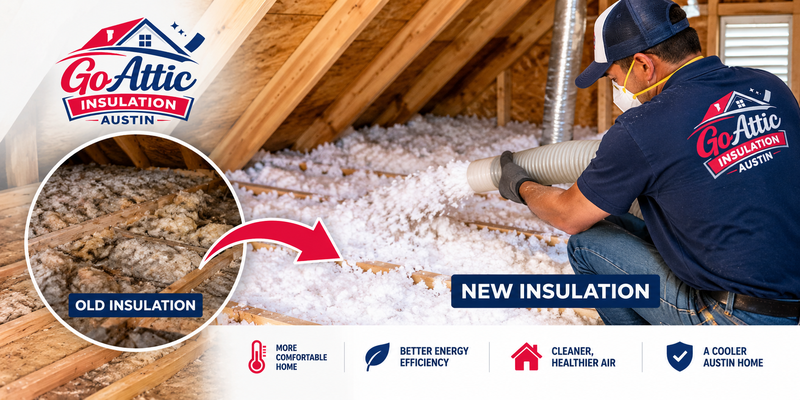
Homeowners often assume that improving attic insulation simply means adding a new layer over whatever is already there. In many cases, that can work. However, there are also situations where old attic insulation should be removed before new insulation is installed.
The right approach depends on the condition of the existing insulation, the type of material in the attic, whether moisture or pest problems are present, and whether the current insulation is still performing properly.
For homeowners in Austin, TX, attic insulation plays an important role in controlling indoor temperatures, reducing heat transfer, and helping HVAC systems work more efficiently during long periods of hot weather.
Understanding when old insulation can stay and when it should be removed can help prevent future problems.
Can New Insulation Be Added Over Old Insulation?
Yes, in many situations, new insulation can be installed over existing attic insulation.
If the old insulation is dry, clean, evenly distributed, and free from contamination, adding more insulation can improve the overall thermal resistance of the attic.
This is sometimes called an insulation top-up.
The purpose is to increase the attic’s insulation level without removing material that is still in acceptable condition.
However, adding new insulation over damaged or contaminated insulation can hide existing problems rather than solve them.
That is why the condition of the old material should be evaluated first.
When Old Attic Insulation Should Be Removed
There are several situations where removing the existing insulation may be the better option.
1. The Insulation Has Water Damage
Moisture is one of the most common reasons old attic insulation should be removed.
Water can enter an attic through:
- Roof leaks
- Damaged flashing
- Plumbing leaks
- Condensation
- Poor ventilation
- HVAC system problems
Wet insulation often loses some of its effectiveness because compressed or moisture-saturated material cannot trap air as efficiently.
Persistent moisture can also contribute to mold growth, wood deterioration, and unpleasant odors.
If insulation has been heavily soaked or repeatedly exposed to moisture, simply covering it with new material may trap the problem underneath.
The moisture source should be identified and repaired before new insulation is installed.
2. There Is Mold or Mildew
Mold growth in an attic usually indicates excessive moisture.
If mold is growing directly on insulation or surrounding building materials, the affected area should be properly evaluated before new insulation is added.
Covering moldy insulation does not eliminate the underlying cause.
In some cases, contaminated insulation needs to be removed so the attic can be cleaned and the moisture problem corrected.
Signs that may indicate a moisture or mold issue include:
- Musty smells
- Dark staining
- Visible fungal growth
- Damp roof decking
- Persistent humidity
- Wet insulation
Addressing the source of moisture is just as important as replacing the damaged insulation.
3. Rodents or Other Pests Have Contaminated the Insulation
Attics can sometimes become nesting areas for rodents, birds, insects, or other pests.
Pest contamination may include:
- Droppings
- Urine
- Nesting material
- Dead insects
- Food debris
- Damaged insulation
Rodents can also compress, move, or tunnel through insulation, reducing its effectiveness.
If contamination is significant, removal may be necessary before installing new insulation.
Adding fresh material directly over contaminated insulation may leave odors and unsanitary material underneath.
Pest entry points should also be sealed before new insulation is installed.
4. The Existing Insulation Has Become Severely Compressed
Insulation works partly by trapping air.
When insulation becomes heavily compressed, it usually provides less thermal resistance than properly installed material.
Compression can happen because of:
- Storage boxes
- Foot traffic
- HVAC equipment installation
- Previous repair work
- Pest activity
- Age and settling
Some settling is normal with certain insulation materials, but excessive compression can reduce performance.
In these situations, the insulation may need to be redistributed, supplemented, or removed depending on its condition.
5. The Insulation Is Extremely Old or Deteriorated
Age alone does not automatically mean insulation must be removed.
Some insulation can remain effective for many years if it stays dry and undisturbed.
However, older insulation may have:
- Settled significantly
- Become dusty or contaminated
- Been damaged by previous roof leaks
- Lost uniform coverage
- Been disturbed during renovations
- Developed gaps around attic penetrations
An attic inspection can help determine whether the material is still useful or whether replacement makes more sense.
6. There Are Large Gaps or Uneven Coverage
Older attic insulation may not provide consistent coverage.
Some sections of the attic may have thick insulation, while others may contain very little.
Common problem areas include:
- Around attic access doors
- Along roof edges
- Near HVAC equipment
- Around recessed lighting
- Near plumbing penetrations
- Around wiring
- Areas disturbed during previous repairs
Uneven insulation can create hot spots and increase heat transfer into the home.
Depending on the condition of the existing material, it may be possible to level and supplement the insulation rather than remove everything.
7. Air Sealing Work Needs to Be Done
One of the biggest reasons homeowners remove attic insulation is to access the attic floor underneath it.
Air leaks can allow conditioned indoor air to move into the attic through gaps and penetrations.
Common air leakage areas include:
- Plumbing penetrations
- Electrical wiring holes
- Ceiling fixtures
- Attic hatches
- Wall top plates
- HVAC openings
- Gaps around ducts
If insulation is covering these areas, removal can make it easier to locate and seal air leaks.
Air sealing before installing new insulation can significantly improve overall attic performance.
8. The Existing Insulation Has Smoke or Odor Damage
Insulation can absorb odors over time.
Smoke from a fire, pest contamination, moisture, or other sources can leave persistent smells in attic materials.
In severe cases, removing contaminated insulation may be necessary to properly clean the attic and eliminate the source of the odor.
Adding new insulation over odor-damaged material usually does not correct the underlying issue.
When Old Insulation Can Usually Stay
Old attic insulation may not need to be removed if it is:
- Dry
- Clean
- Free from mold
- Free from pest contamination
- Evenly distributed
- Structurally undisturbed
- Not blocking ventilation
- Compatible with the new insulation
In these situations, adding more insulation may be a practical way to improve attic performance.
A professional evaluation can help determine whether the existing material is still suitable.
What Happens During Attic Insulation Removal?
When insulation removal is necessary, the old material is typically removed using specialized equipment or controlled manual methods.
The process may include:
- Inspecting the attic
- Identifying contaminated or damaged areas
- Removing old insulation
- Cleaning debris
- Inspecting roof decking and framing
- Addressing moisture or pest problems
- Air sealing gaps and penetrations
- Preparing the attic for new insulation
- Installing the replacement material
This process allows hidden attic problems to be identified before they are covered with new insulation.
Should All Old Insulation Be Removed?
Not always.
Partial removal may be enough if only one section has been damaged.
For example, insulation near a roof leak may need to be removed while dry, clean insulation in another area remains usable.
Removing the entire attic insulation layer is generally more appropriate when contamination, water damage, pest activity, or deterioration is widespread.
The decision should be based on actual attic conditions rather than automatically replacing everything.
Why Attic Insulation Matters in Austin
Austin homes experience long periods of high temperatures, especially during summer.
Because roofs and attic spaces can become extremely hot, attic insulation helps reduce the amount of heat moving into living areas below.
Insufficient or damaged insulation may contribute to:
- Hot upstairs rooms
- Uneven indoor temperatures
- Longer HVAC run times
- Higher cooling demand
- Warm ceilings
- Reduced indoor comfort
Attic insulation works best when combined with proper air sealing, ventilation, and moisture control.
Simply adding more insulation without addressing these other issues may not produce the expected results.
How Much Insulation Does an Attic Need?
The amount of insulation needed depends on several factors, including:
- Insulation material
- Existing insulation depth
- Home construction
- Attic design
- Local climate
- Energy-efficiency goals
Insulation performance is typically measured using R-value.
A higher R-value means greater resistance to heat flow.
Instead of judging insulation only by depth, homeowners should consider both the insulation type and its overall R-value.
Fiberglass vs. Blown-In Insulation
Two common attic insulation options include fiberglass and blown-in insulation.
Fiberglass Insulation
Fiberglass is commonly available in batts or rolls.
It can work well when installed correctly between framing members, but gaps or compression can reduce performance.
Blown-In Insulation
Blown-in insulation is installed using specialized equipment and can cover irregular attic areas more evenly.
It is often used to add insulation over existing material because it can fill small spaces and gaps.
The best material depends on the attic’s condition, structure, and installation requirements.
Why Air Sealing Should Be Considered Before Adding Insulation
Insulation slows heat transfer, but it does not always stop uncontrolled air movement.
An attic can have plenty of insulation and still perform poorly if air is escaping through gaps in the ceiling.
Air sealing can help reduce airflow between the living space and the attic.
That is why insulation upgrades often work best when attic air leaks are addressed at the same time.
Signs Your Attic Insulation May Need Attention
Homeowners may want to inspect their attic insulation if they notice:
- Uneven indoor temperatures
- Hot rooms during summer
- Excessive HVAC operation
- Visible insulation gaps
- Wet or damp insulation
- Pest activity
- Musty odors
- Insulation below expected depth
- Significant settling
- Recent roof leaks
These signs do not always mean all insulation must be replaced, but they may indicate that the attic should be evaluated.
Is Removing Old Attic Insulation Worth It?
Removing old insulation can be worthwhile when the existing material is damaged, contaminated, wet, or interfering with air-sealing work.
However, removing insulation that is still clean and functional may add unnecessary expense.
A proper attic inspection can help determine the most practical approach.
The goal should be to improve the overall attic system rather than simply replace insulation because it is old.
Attic Insulation Services in Austin, TX
If you are unsure whether your existing attic insulation should be removed or simply supplemented, Go Attic Insulation Austin can help evaluate the condition of your attic. We provide attic insulation services for homeowners in Austin, TX, including insulation removal, insulation replacement, insulation upgrades, and attic efficiency improvements. Our team can inspect your existing insulation and recommend an appropriate solution based on moisture, contamination, coverage, and overall attic condition.