
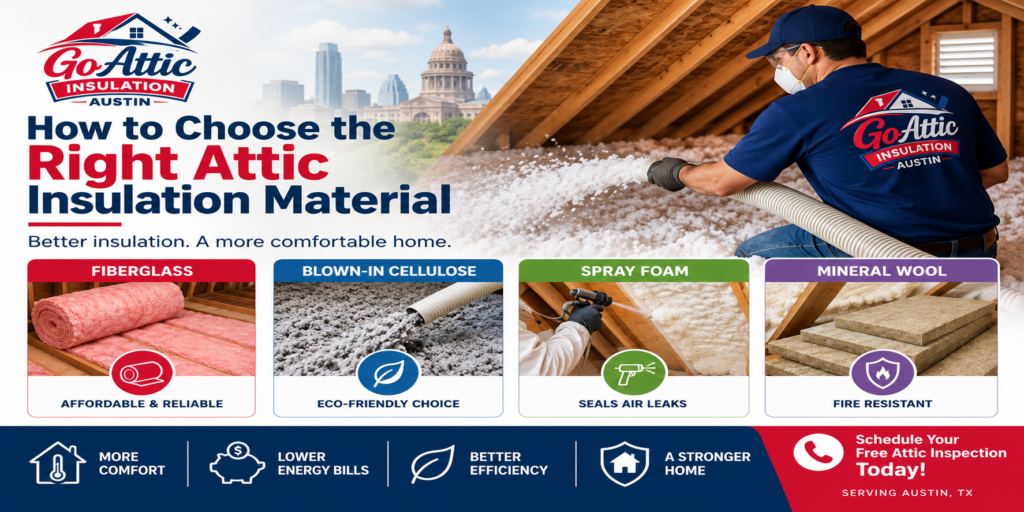
Choosing the right attic insulation material is one of the most important decisions homeowners can make to improve comfort, reduce energy costs, and protect their home year-round. With several insulation options available, selecting the best material depends on factors such as your home’s construction, budget, energy goals, and existing attic conditions. Understanding the strengths of each insulation type can help you make an informed decision and maximize the performance of your attic insulation.
Why the Right Insulation Material Matters
Attic insulation acts as a barrier that slows the transfer of heat between your living space and the outdoors. During Austin’s hot summers, quality insulation helps keep cooled air inside while preventing excessive heat from entering your home. During cooler months, it helps retain indoor warmth, allowing your HVAC system to operate more efficiently.
Benefits of choosing the right insulation material include:
- Improved year-round indoor comfort.
- Lower heating and cooling costs.
- Better energy efficiency.
- Reduced strain on HVAC equipment.
- More consistent indoor temperatures.
- Enhanced overall home value.
Selecting the proper insulation material ensures your attic performs efficiently for years to come.
Common Types of Attic Insulation
Several insulation materials are commonly used in residential attics, each offering unique advantages.
Fiberglass Insulation
Fiberglass insulation is one of the most widely used options due to its affordability and reliable thermal performance. It is available in both batt and blown-in forms, making it suitable for many attic layouts.
Blown-In Cellulose
Cellulose insulation is made primarily from recycled paper products treated for fire resistance. Its loose-fill design allows it to fill gaps and irregular spaces effectively, helping improve overall coverage.
Spray Foam Insulation
Spray foam expands after application, sealing air leaks while providing excellent insulation. It offers superior air sealing capabilities and is often chosen for homes where minimizing air infiltration is a priority.
Mineral Wool Insulation
Mineral wool provides excellent thermal performance while also offering strong fire resistance and sound-reducing properties. It performs well in a variety of attic conditions.
Factors to Consider Before Choosing Insulation
Every attic is different, so several factors should be considered before selecting an insulation material.
Energy Efficiency Goals
If lowering monthly utility bills is your primary objective, choosing an insulation material with strong thermal performance can significantly improve your home’s efficiency.
Existing Attic Conditions
Your current insulation, attic ventilation, moisture levels, and available space all influence which material will provide the best results.
Budget
Different insulation materials vary in installation costs and long-term value. Balancing your budget with expected energy savings can help you make the right investment.
Installation Requirements
Some insulation materials are easier to install than others. Complex attic layouts or older homes may benefit from insulation that can easily fill tight spaces and irregular cavities.
Signs It’s Time to Upgrade Your Attic Insulation
Even high-quality insulation eventually loses effectiveness. Consider upgrading if you notice:
- Increasing energy bills.
- Uneven temperatures between rooms.
- Hot upstairs living areas.
- Drafts inside the home.
- Compressed or damaged insulation.
- HVAC system running longer than usual.
Replacing or upgrading insulation can restore comfort while improving your home’s overall energy performance.
Can Different Insulation Materials Be Combined?
In many cases, different insulation materials can work together to improve overall attic performance. For example, existing insulation may remain in place while additional blown-in insulation is added to achieve the recommended insulation level. However, compatibility, moisture control, and proper installation should always be considered before combining materials. A professional assessment helps determine the safest and most effective approach for your specific attic.
Importance of Proper Installation
Even the highest-quality insulation material will not perform as intended if it is installed incorrectly. Gaps, compressed insulation, blocked ventilation, or uneven coverage can reduce efficiency and lead to comfort issues. Professional installation helps ensure the insulation is applied evenly, ventilation remains unobstructed, and the attic delivers maximum thermal performance throughout the year.
Choosing the Best Solution for Your Home
There is no single insulation material that is perfect for every home. The ideal choice depends on your attic’s condition, the age of your home, your energy-efficiency goals, and your budget. A thorough attic evaluation can help determine which material provides the best combination of performance, durability, and long-term value for your specific property.
Trust Go Attic Insulation Austin for Professional Attic Insulation
If you’re unsure which attic insulation material is right for your home, Go Attic Insulation Austin is here to help. We proudly serve homeowners throughout Austin, TX with professional attic insulation inspections, recommendations, and installation services tailored to each property’s unique needs.
Our experienced team evaluates your attic, explains your insulation options, and installs high-quality materials designed to improve comfort, increase energy efficiency, and protect your home for years to come. Whether you’re replacing outdated insulation or upgrading your attic for better performance, you can count on Go Attic Insulation Austin for dependable service and quality workmanship. Contact us today to schedule your attic insulation assessment and discover the right insulation solution for your home.