
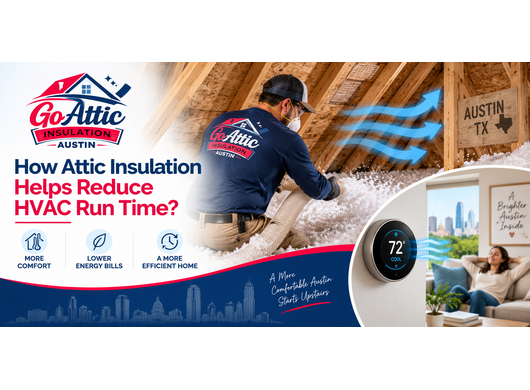
For homeowners in Austin, keeping a home comfortable can put significant demand on the HVAC system, especially during long stretches of hot Texas weather. One of the most effective ways to reduce unnecessary heating and cooling cycles is by improving attic insulation.
Proper attic insulation helps slow heat transfer between your living space and the attic. When your home maintains its indoor temperature more effectively, your HVAC system does not need to run as frequently or for as long to keep you comfortable.
Why HVAC Systems Run Longer in Poorly Insulated Homes
During an Austin summer, attic temperatures can become extremely high. When an attic has insufficient or deteriorated insulation, much of that heat can transfer through the ceiling and into the rooms below.
As indoor temperatures rise, your air conditioner must operate longer to reach the thermostat setting. Even after the desired temperature is reached, the system may need to start another cooling cycle sooner because heat continues entering the home.
The same principle works in reverse during colder weather. Heated indoor air can escape through an inadequately insulated attic, forcing the heating system to replace that lost warmth.
Attic Insulation Slows Heat Transfer
Insulation works by creating resistance to heat flow.
Instead of allowing outdoor heat to quickly enter your living areas, attic insulation helps create a thermal barrier between the conditioned areas of your home and the attic.
With adequate insulation, your home may maintain a more stable indoor temperature for longer periods. This means your HVAC system can spend more time switched off between cycles.
Reducing unnecessary HVAC operation can also make the home feel more consistently comfortable throughout the day.
Less HVAC Run Time Can Mean Lower Energy Use
Cooling and heating equipment can account for a significant portion of a home’s energy consumption.
If an air conditioner has to run continuously to compensate for heat entering through the attic, energy use naturally increases.
Improving attic insulation may help reduce this workload by allowing conditioned air to remain effective for longer.
Potential benefits include:
- Reduced HVAC operating time
- More stable indoor temperatures
- Less unnecessary energy consumption
- Improved comfort throughout the home
- Reduced strain on heating and cooling equipment
- Better overall home energy efficiency
Actual results depend on factors such as your existing insulation, HVAC system, home construction, air leakage, thermostat settings, windows, and weather conditions.
Insulation Can Help Your HVAC System Work More Efficiently
Your HVAC system is designed to maintain the temperature inside your home, but insulation helps create an environment where the equipment can do its job more effectively.
Think of insulation as part of the home’s thermal envelope.
If the envelope has weak areas, conditioned air can escape while outdoor heat enters. Your HVAC equipment then has to compensate for those losses.
Adding or upgrading attic insulation can help reduce that constant battle between your HVAC system and outdoor temperatures.
Rather than repeatedly cooling rooms that quickly become warm again, the system can maintain the desired indoor temperature for longer periods.
More Consistent Temperatures Between Rooms
Poor attic insulation can sometimes contribute to noticeable temperature differences throughout a home.
For example, upstairs bedrooms or rooms located directly beneath the attic may feel considerably warmer than other areas.
Homeowners may respond by lowering the thermostat, causing the HVAC system to operate longer while other rooms become unnecessarily cold.
Proper attic insulation can help reduce unwanted heat transfer and support more consistent temperatures throughout the home.
That can allow homeowners to maintain comfortable thermostat settings without constantly adjusting the system.
Attic Insulation and Air Sealing Work Together
Insulation is important, but it works even better when major air leaks are addressed.
Small gaps around plumbing penetrations, electrical wiring, recessed lighting, attic access points, and other openings can allow conditioned air to move between the living area and attic.
Adding insulation without addressing significant air leakage may leave some efficiency problems unresolved.
For many Austin homes, evaluating both attic insulation and potential air leakage can provide a better understanding of why the HVAC system is running frequently.
Signs Your Attic Insulation May Need Attention
You may want to have your attic inspected if you notice:
- Your air conditioner runs for long periods
- Certain rooms are noticeably hotter or colder
- Indoor temperatures change quickly
- Energy consumption has increased
- Existing insulation looks thin, compressed, damaged, or uneven
- Your home has an older insulation installation
- The upper level becomes uncomfortable during hot weather
These symptoms do not always mean insulation is the only problem. HVAC sizing, ductwork, air leaks, windows, and equipment condition can also affect system performance.
An attic inspection can help identify whether insulation may be contributing to the issue.
Why Attic Insulation Matters in Austin
Austin homeowners deal with extended periods of warm weather, which makes the attic an important part of the home’s energy-efficiency strategy.
When attic insulation provides adequate thermal resistance, less outdoor heat reaches the living space. Your air conditioner can reach the thermostat setting more efficiently and may remain off longer before the next cooling cycle begins.
Improving insulation can therefore support both indoor comfort and HVAC efficiency.
Professional Attic Insulation Services in Austin, TX
Go Attic Insulation Austin provides attic insulation solutions for homeowners in Austin, Texas. Whether your existing insulation has settled, become damaged, or no longer provides adequate coverage, evaluating the attic can help determine what improvements may be appropriate for your home.
Improving attic insulation can help create a stronger thermal barrier, support more consistent indoor temperatures, and reduce unnecessary demand on your HVAC system.
If your heating or cooling equipment seems to be running longer than expected, your attic may be one of the first areas worth checking.