
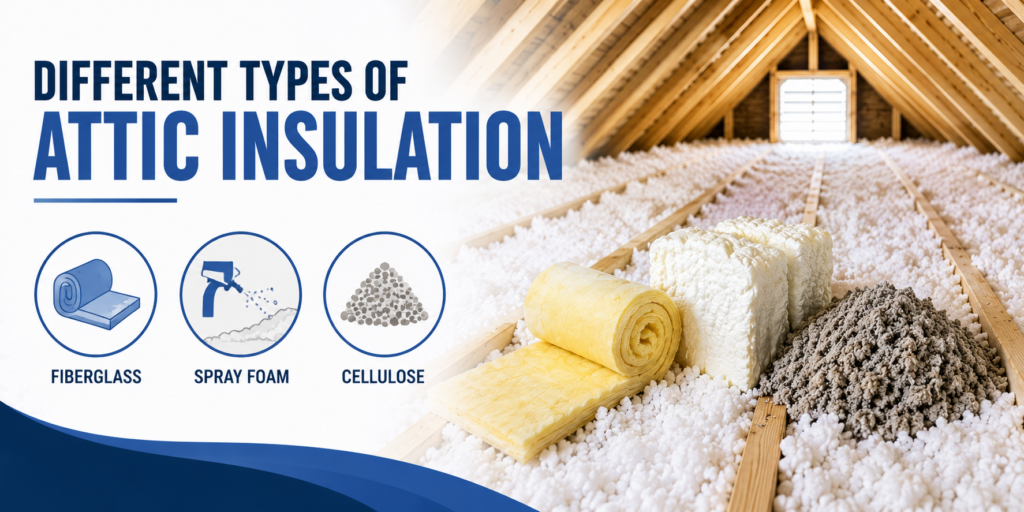
Choosing the right attic insulation is an important step toward improving your home’s energy efficiency, indoor comfort, and overall performance. With several insulation options available, homeowners often wonder which type is best for their specific needs. Each insulation material offers unique benefits, and the ideal choice depends on factors such as budget, attic design, climate, and energy-efficiency goals.
Why Attic Insulation Matters
Attic insulation helps reduce heat transfer between your home’s interior and the outdoor environment. During hot weather, it slows the movement of heat into living spaces, while during cooler months it helps retain indoor warmth. Proper insulation can contribute to lower energy consumption, improved comfort, and reduced strain on heating and cooling systems.
Fiberglass Batt Insulation
Fiberglass batt insulation is one of the most common insulation materials used in residential attics. It comes in pre-cut panels that fit between attic joists and framing components.
Benefits of Fiberglass Batt Insulation
- Widely available and cost-effective
- Relatively simple to install
- Provides reliable thermal performance
- Suitable for attics with accessible and open spaces
Fiberglass batts can be an effective option when properly installed, but gaps and compression may reduce their overall performance.
Blown-In Fiberglass Insulation
Blown-in fiberglass insulation consists of small fiberglass particles that are installed using specialized equipment. This material can be distributed evenly across attic floors and around obstacles.
Benefits of Blown-In Fiberglass
- Covers irregular spaces effectively
- Helps reduce gaps in insulation coverage
- Suitable for adding insulation to existing attics
- Provides consistent thermal protection
Many homeowners choose blown-in fiberglass when upgrading older insulation systems.
Cellulose Insulation
Cellulose insulation is made primarily from recycled paper products that are treated for durability and fire resistance. It is commonly installed as a blown-in material.
Benefits of Cellulose Insulation
- Excellent coverage in hard-to-reach areas
- Helps reduce air movement through attic spaces
- Made from recycled materials
- Effective for improving overall attic insulation levels
Cellulose can be a strong option for homeowners seeking comprehensive attic coverage.
Spray Foam Insulation
Spray foam insulation is applied as a liquid that expands into a foam barrier after installation. It can be used in attics to help insulate and reduce air leakage.
Benefits of Spray Foam Insulation
- Creates an effective air-sealing barrier
- Provides high insulating value
- Helps minimize drafts and heat transfer
- Suitable for difficult-to-insulate areas
Because of its ability to insulate and air seal simultaneously, spray foam is often considered one of the most effective insulation options available.
Radiant Barrier Systems
Although technically different from traditional insulation, radiant barriers are commonly installed in attics to help reduce heat gain. They work by reflecting radiant heat away from the home.
Benefits of Radiant Barriers
- Helps reduce attic heat buildup
- Can complement existing insulation
- Particularly useful in warm climates
- Supports overall energy efficiency
Radiant barriers are often used alongside other insulation materials rather than as a standalone solution.
Which Type of Attic Insulation Is Best?
The best attic insulation depends on your home’s specific requirements.
- Fiberglass Batts are a practical option for straightforward attic spaces and budget-conscious projects.
- Blown-In Fiberglass provides excellent coverage and is commonly used for insulation upgrades.
- Cellulose Insulation offers effective coverage and can perform well in a variety of attic configurations.
- Spray Foam Insulation is often considered a premium solution because it combines insulation and air sealing in one application.
- Radiant Barriers can provide additional benefits when paired with other insulation systems, especially in warmer climates.
For many homeowners, a combination of insulation methods may provide the best overall results.
Factors to Consider Before Choosing Insulation
Before selecting an insulation type, it is important to consider:
- Existing insulation condition
- Attic layout and accessibility
- Energy-efficiency goals
- Local climate conditions
- Budget and long-term value
A professional attic evaluation can help determine which insulation solution is best suited for your home.
Professional Attic Insulation Services in Austin, TX
If you’re considering upgrading your attic insulation, Go Attic Insulation Austin is here to help. We provide professional attic insulation services for homeowners throughout Austin, TX. Whether you’re interested in blown-in insulation, spray foam insulation, insulation removal, or radiant barrier installation, our team can assess your attic and recommend solutions based on your home’s specific needs. At Go Attic Insulation Austin, we are committed to helping homeowners improve comfort, support energy efficiency, and enhance overall home performance with quality attic insulation services in Austin, TX.