
When it comes to improving your home’s energy efficiency, attic insulation is one of the most important investments you can make. However, many homeowners face a common question: Should you insulate the attic floor or the roof deck? Although both methods help reduce heat transfer, they serve different purposes and can significantly affect your home’s indoor comfort, energy consumption, and long-term performance.
For homeowners in Austin, TX, where summer temperatures can soar and air conditioning systems work overtime, choosing the right attic insulation method is especially important. Understanding the differences between attic floor insulation and roof deck insulation can help you make an informed decision that suits your home’s structure, budget, and energy efficiency goals.
Understanding the Difference Between Attic Floor and Roof Deck Insulation
Before deciding which insulation method is best for your home, it’s important to understand how each approach works.
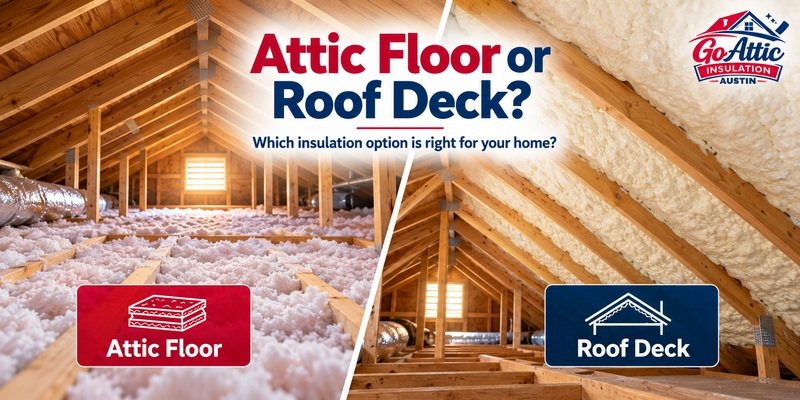
Attic floor insulation is installed between and above the ceiling joists, creating a thermal barrier between your conditioned living space and the unconditioned attic. This method helps keep indoor temperatures comfortable while allowing the attic to remain outside the home’s thermal envelope.
Roof deck insulation, on the other hand, is installed along the underside or sometimes above the roof sheathing. It creates a thermal boundary at the roofline and is commonly used to establish an unvented, conditioned or semi-conditioned attic.
Both approaches can be effective when designed and installed correctly. However, the right choice depends on factors such as attic ventilation, HVAC equipment location, moisture control, and the home’s overall construction.
1. Benefits of Insulating the Attic Floor
Attic floor insulation is one of the most common insulation methods used in residential homes throughout Austin and surrounding Texas communities.
This approach helps prevent unwanted heat transfer between the attic and living areas while keeping the attic outside the conditioned space.
Helps Improve Energy Efficiency
During Austin’s hot summer months, attic temperatures can become significantly higher than outdoor temperatures.
Proper attic floor insulation reduces the amount of heat transferring from the attic into the rooms below, helping your cooling system maintain more consistent indoor temperatures.
More Affordable Installation
In many existing homes, attic floor insulation is less expensive than roof deck insulation because the installation process is generally simpler and requires less specialized work.
Homeowners can often improve insulation coverage without making major changes to the roof assembly.
Works Well With Vented Attics
Traditional vented attic systems are designed to allow outdoor air to circulate through properly positioned vents.
Insulating the attic floor maintains the thermal separation between the living space and the attic without changing the intended ventilation system.
Easier to Upgrade Existing Insulation
If your attic already has fiberglass batts or blown-in insulation, additional insulation may be installed after evaluating the existing materials, air sealing, and ventilation conditions.
This makes attic floor insulation a practical option for many homeowners looking to improve comfort without extensive renovations.
2. Benefits of Insulating the Roof Deck
Roof deck insulation takes a different approach by moving the thermal boundary from the attic floor to the roofline.
This method can be particularly beneficial when the attic contains HVAC equipment, ductwork, or other systems that would perform better within a more temperature-controlled environment.
Helps Reduce Extreme Attic Temperatures
By insulating the roofline, heat transfer through the roof assembly can be reduced, which may help maintain less extreme temperatures inside the attic.
This can be useful in Austin, where roof surfaces receive intense sunlight during much of the year.
May Improve HVAC Efficiency
Many Texas homes have air conditioning ducts and equipment installed in their attics.
When these components operate in a very hot attic, duct heat gain and air leakage can affect cooling performance.
A properly designed insulated roof deck can help reduce the temperature difference between attic air and conditioned living spaces, potentially reducing energy losses associated with attic HVAC systems.
Creates More Usable Attic Conditions
Roof deck insulation may make the attic more suitable for certain storage or equipment applications by reducing extreme temperature fluctuations.
However, insulation alone does not automatically make an attic safe or suitable for finished living space. Additional building requirements must be considered.
Helps Reduce Certain Air Leakage Problems
Some roof deck insulation systems, particularly properly installed spray foam assemblies, can provide both insulation and air sealing.
This may help reduce unwanted air movement through the roof assembly when the system is designed and installed correctly.
3. Attic Floor vs. Roof Deck Insulation: Which Is Better?
Both insulation methods offer advantages, but they are designed for different types of attic systems.
| Feature | Attic Floor Insulation | Roof Deck Insulation |
|---|---|---|
| Installation location | Above the ceiling | Along the roofline |
| Typical cost | Generally lower | Generally higher |
| Best suited for | Traditional vented attics | Properly designed unvented attic systems |
| Attic temperature | Remains closer to outdoor conditions | Typically less extreme |
| HVAC equipment in attic | Equipment remains in an unconditioned space | Can reduce equipment and duct exposure to heat |
| Installation complexity | Usually simpler | Requires more detailed planning |
| Insulation materials | Fiberglass, cellulose, mineral wool | Spray foam, rigid foam, and approved assemblies |
| Main benefit | Separates living space from attic | Brings attic within the thermal boundary |
For many existing Austin homes with conventional vented attics, insulating and air sealing the attic floor is a practical and cost-effective choice.
However, roof deck insulation may provide additional advantages when HVAC systems are located in the attic or when the home’s construction supports an unvented attic design.
4. Which Insulation Method Is Better for Austin’s Hot Climate?
Austin experiences long, hot summers, making attic insulation an important factor in maintaining comfortable indoor temperatures.
When sunlight heats the roof, heat can transfer into the attic and eventually affect the rooms below.
For homes with vented attics:
Installing sufficient attic floor insulation, sealing ceiling penetrations, and maintaining proper ventilation can help reduce unwanted heat transfer.
For homes with HVAC equipment in the attic:
A properly designed roof deck insulation system may reduce the temperature extremes surrounding ducts and air conditioning equipment.
However, climate alone does not determine which approach is best. The home’s roof assembly, air sealing, ventilation design, moisture management, and existing equipment all influence the decision.
A professional attic insulation assessment can help identify the most suitable approach.
5. What Types of Insulation Can Be Used?
Choosing the right insulation material is just as important as deciding where it should be installed.
Fiberglass Insulation
Fiberglass is commonly used for attic floors and is available in batts or loose-fill form.
It provides thermal resistance, is widely available, and can be an economical solution when installed at the appropriate depth without gaps or compression.
Blown-In Cellulose Insulation
Cellulose insulation is typically installed using specialized blowing equipment.
It can provide effective coverage around ceiling joists and irregular spaces, making it a popular option for upgrading attic floor insulation.
Spray Foam Insulation
Spray polyurethane foam is commonly used in certain roof deck insulation systems because it can provide thermal resistance and air sealing.
Different spray foam types have different vapor-control characteristics and installation requirements.
Correct application, ventilation during installation, and compliance with building codes are important.
Mineral Wool Insulation
Mineral wool provides thermal insulation and is available in forms suitable for certain attic floor and roof assemblies.
Its fire-resistance characteristics can make it useful in specific applications, although the complete assembly must still meet applicable requirements.
The best insulation material depends on the home’s construction, desired thermal performance, installation conditions, and budget.
6. Does Roof Deck Insulation Cost More Than Attic Floor Insulation?
In most cases, roof deck insulation requires a higher initial investment than attic floor insulation.
Several factors influence the total installation cost, including:
- Total attic or roof surface area
- Existing insulation condition
- Type and thickness of insulation material
- Roof pitch and accessibility
- Air sealing requirements
- Ventilation and moisture-control modifications
- Labor and equipment needs
- Local building code requirements
Roof deck insulation may require additional planning because changing a vented attic into an unvented assembly can affect how the roof manages air and moisture.
Although roof deck insulation typically costs more upfront, it may provide energy-related advantages in certain homes, especially those with significant ductwork in the attic.
Homeowners should compare the complete project cost with the expected comfort and energy performance benefits rather than focusing only on installation price.
7. Can You Insulate Both the Attic Floor and Roof Deck?
It is physically possible to install insulation at both locations, but doing so is not automatically necessary or beneficial.
A home’s insulation system should have a clearly defined thermal and air boundary.
Adding insulation to both the attic floor and roof deck without proper planning may create unnecessary expenses or complicate moisture management.
For example, converting a vented attic into an unvented attic requires more than simply applying insulation beneath the roof sheathing. Vent openings, air leakage, vapor control, and the roof assembly must all be addressed.
In certain specialized designs, insulation at both locations may be appropriate, but a qualified professional should evaluate the entire building assembly before recommending this approach.
8. How Does Attic Insulation Affect Your Energy Bills?
Attic insulation helps reduce heat movement between the home and surrounding spaces.
When insulation is insufficient, uneven, or poorly installed, unwanted heat transfer can place additional demand on heating and cooling equipment.
Proper insulation may help homeowners experience:
- More consistent indoor temperatures
- Reduced cooling and heating demand
- Improved comfort in upstairs rooms
- Less unwanted heat transfer through ceilings or roof assemblies
- Better overall energy performance
Actual energy savings vary based on insulation levels, air leakage, HVAC efficiency, local weather, and household energy use.
For Austin homeowners, combining insulation improvements with effective air sealing is often an important part of achieving better results.
9. Common Attic Insulation Mistakes to Avoid
Whether you’re upgrading attic floor insulation or considering roof deck insulation, avoiding installation mistakes can help protect your investment.
Blocking Attic Ventilation
In vented attics, insulation should not block soffit vents or interfere with the intended ventilation system.
Ignoring Air Leaks
Insulation alone does not stop all unwanted airflow. Gaps around plumbing penetrations, recessed fixtures, and attic access points may need appropriate air sealing.
Installing Insufficient Insulation
Using too little insulation can reduce the thermal performance of the attic assembly.
Compressing Fiberglass Insulation
Compressing insulation can reduce its effective thermal resistance.
Installing Roof Deck Insulation Without Moisture Planning
Roofline insulation must be compatible with the roof assembly and local climate conditions to avoid creating moisture-related problems.
Covering Unsafe or Damaged Materials
Water-damaged insulation, pest contamination, and certain electrical hazards should be evaluated before installing new insulation.
Professional installation can help avoid these common problems and ensure the insulation system is appropriate for the home.
10. How Do You Know Which Insulation Method Your Home Needs?
The best way to determine whether your attic floor or roof deck should be insulated is to evaluate the existing attic conditions.
Important factors include:
- Current Insulation Levels: Determine whether the existing insulation provides sufficient thermal resistance.
- Attic Ventilation: Identify whether the home has a traditional vented attic or an unvented roof assembly.
- HVAC Equipment Location: Check whether ductwork or air conditioning equipment is located inside the attic.
- Moisture Conditions: Look for evidence of water leaks, condensation, or damaged insulation.
- Home Energy Performance: Consider uncomfortable rooms, uneven temperatures, and high cooling costs.
- Budget and Long-Term Goals: Compare installation expenses with potential comfort and energy benefits.
For many Austin-area homes, professional air sealing and attic floor insulation upgrades can provide meaningful improvements.
For others, especially homes undergoing major renovations or roof replacements, roof deck insulation may be worth considering.
Final Thoughts
Choosing between attic floor insulation and roof deck insulation depends on your home’s construction, ventilation system, HVAC location, budget, and energy efficiency goals.
Attic floor insulation is often the most practical solution for traditional vented attics, providing effective thermal protection at a relatively affordable cost.
Roof deck insulation can offer additional benefits in certain homes, especially those with air conditioning equipment and ductwork located inside the attic.
For homeowners in Austin, TX, investing in a properly designed attic insulation system can help improve indoor comfort, reduce unwanted heat transfer, and support better energy performance during the region’s demanding summer months.
The most effective insulation solution is one that complements your home’s entire building system rather than focusing on insulation thickness alone.
Upgrade Your Home’s Comfort With Go Attic Insulation in Austin, TX
Looking for professional attic insulation services in Austin, TX? Go Attic Insulation helps homeowners improve indoor comfort and energy efficiency through dependable attic insulation solutions. Whether you’re considering attic floor insulation, exploring roof deck insulation options, or planning to replace old and ineffective insulation, our team can help evaluate your attic’s condition and recommend an appropriate approach. We proudly serve Austin, Round Rock, Cedar Park, Pflugerville, Georgetown, and surrounding communities, providing attic insulation services focused on quality materials, proper coverage, and lasting comfort. Don’t let insufficient insulation make your home uncomfortable during the Texas heat. Contact Go Attic Insulation today to schedule an attic insulation assessment and discover the right solution for your home!