
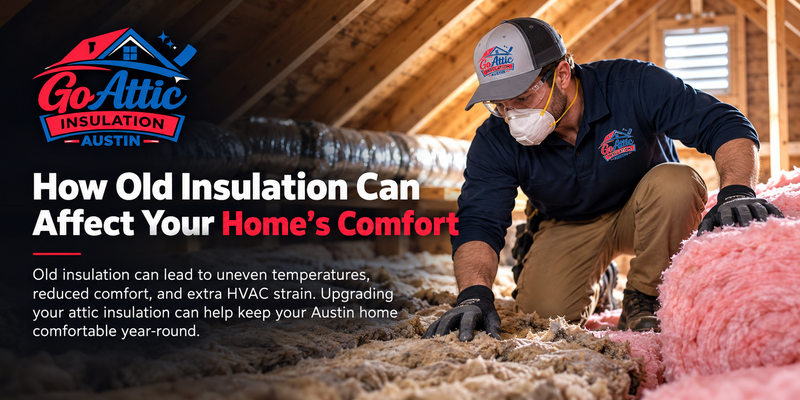
Insulation plays an important role in helping your home stay comfortable throughout the year. In a climate like Austin, where summers can be extremely hot and temperatures can still drop during winter, your attic insulation helps reduce unwanted heat transfer between your living space and the outdoors.
Over time, however, insulation can become less effective. Age, moisture, settling, dust, pests, and other factors can reduce how well it performs. If your home feels harder to cool, certain rooms are noticeably warmer than others, or your HVAC system seems to run more often, old attic insulation may be part of the problem.
Old Insulation Can Lose Effectiveness
Insulation is designed to slow the movement of heat, but its performance can decline as it ages. Some insulation materials may settle or compress over time, reducing the depth and coverage needed to provide consistent thermal protection.
When insulation becomes thin or uneven, more heat can move through the attic and into the living areas below. During Austin summers, this can make the upper parts of your home feel noticeably warmer and put additional pressure on your air conditioning system.
Uneven Temperatures Throughout the Home
One common sign of aging or insufficient insulation is uneven indoor temperatures. You may notice that one bedroom stays warmer than the rest of the house, upstairs rooms become uncomfortable in the afternoon, or certain areas take much longer to cool.
These temperature differences may occur when insulation coverage is inconsistent across the attic. Gaps, compressed sections, or areas with insufficient material can allow more heat to enter specific parts of the home.
Improving attic insulation coverage can help create a more balanced indoor environment.
Your HVAC System May Work Harder
When old insulation no longer slows heat transfer effectively, your HVAC system may need to run longer to maintain the temperature set on your thermostat.
During hot weather, heat entering through the attic can increase the cooling load on your air conditioner. The system may cycle more frequently or operate for longer periods, especially during the hottest part of the day.
While several factors can affect HVAC performance, attic insulation is an important part of the home’s overall energy-efficiency system.
Higher Indoor Heat During Austin Summers
Attics can become extremely hot in Texas. Without sufficient insulation between the attic and your home’s living space, some of that heat can transfer downward.
Older insulation that has settled, deteriorated, or become damaged may offer less resistance to this heat movement. As a result, ceilings and upper-level rooms may feel warmer even when the air conditioner is running.
Maintaining adequate insulation can help create a stronger thermal barrier between your attic and indoor living areas.
Old Insulation May Develop Gaps
Insulation does not always remain evenly distributed for its entire lifespan. Over time, material can shift or settle, especially around attic access points, plumbing, electrical components, ductwork, or areas where people have walked through the attic.
Even small gaps can affect the overall performance of an insulation system. These weak points may allow heat to move more easily into or out of the home.
A professional attic evaluation can help identify areas where insulation has become uneven or where additional coverage may be beneficial.
Moisture Can Reduce Insulation Performance
Moisture is another factor that can affect older insulation. Roof leaks, condensation, or high humidity can sometimes introduce moisture into the attic.
Wet or damp insulation may not perform as intended and can sometimes become compressed or damaged. Moisture can also indicate a larger issue that should be addressed before new insulation is added.
If your insulation appears stained, damp, or deteriorated, it is important to identify the source of the moisture first.
Pest Activity Can Damage Insulation
Attics can occasionally become home to rodents, insects, or other pests. These unwanted visitors may disturb insulation, create tunnels, compress materials, or contaminate certain areas.
Damaged insulation may leave sections of the attic with poor coverage. In these situations, removing affected material and restoring the insulation layer can help improve both cleanliness and thermal performance.
Any active pest issue should also be addressed before insulation replacement.
Dust and Debris Can Accumulate Over Time
Older attic insulation can collect dust, debris, and other particles over many years. While surface dust alone does not always mean the insulation needs to be replaced, heavy contamination or deterioration may indicate that the material is no longer in ideal condition.
Homeowners who are already planning attic improvements, air sealing, or renovations may decide to have old insulation evaluated at the same time.
Poor Insulation Can Affect Winter Comfort Too
Although Austin is known for hot summers, proper insulation also matters during cooler weather.
During winter, heat generated inside the home can escape through the ceiling and attic if insulation is insufficient. This may make rooms feel cooler and cause the heating system to run more frequently.
A well-insulated attic helps slow heat movement in both directions, making it useful throughout the year.
Insulation Works Best With Proper Air Sealing
Insulation is only one part of an efficient attic system. Small gaps around wiring, plumbing penetrations, recessed lights, attic access points, and other openings can allow conditioned air to escape.
If old insulation is being replaced or upgraded, it can be a good opportunity to inspect the attic for air leaks as well. Combining appropriate insulation coverage with proper air sealing can help improve overall home comfort.
Signs Your Attic Insulation May Need Attention
You may want to have your attic insulation evaluated if you notice:
- Rooms that are consistently too hot or too cold
- Large temperature differences between floors
- An HVAC system that runs for long periods
- Insulation that appears thin or uneven
- Bare areas of the attic floor
- Visible moisture or staining
- Damaged or compressed insulation
- Signs of pests in the attic
- Drafts near attic access points
- An older home with insulation that has not been updated in many years
These signs do not always mean complete replacement is necessary, but they can indicate that an inspection would be useful.
When Should Old Insulation Be Replaced?
There is no single replacement schedule that applies to every home. The condition of the insulation matters more than age alone.
Some insulation can remain effective for many years if it stays dry, clean, and properly installed. Other insulation may need attention sooner because of moisture, pests, settling, renovations, or inadequate original installation.
A professional inspection can help determine whether your attic needs additional insulation, partial replacement, or removal of older material.
Improve Home Comfort With Go Attic Insulation Austin
If your home feels uncomfortable, your attic insulation looks old or uneven, or you are simply unsure whether your current insulation is still doing its job, Go Attic Insulation Austin is ready to help. We provide professional attic insulation services throughout Austin and surrounding areas, including insulation evaluation, removal, replacement, and installation. Our team can assess the condition of your attic and recommend practical solutions based on your home’s needs. Contact Go Attic Insulation Austin today to help improve indoor comfort and prepare your home for changing Texas temperatures.