
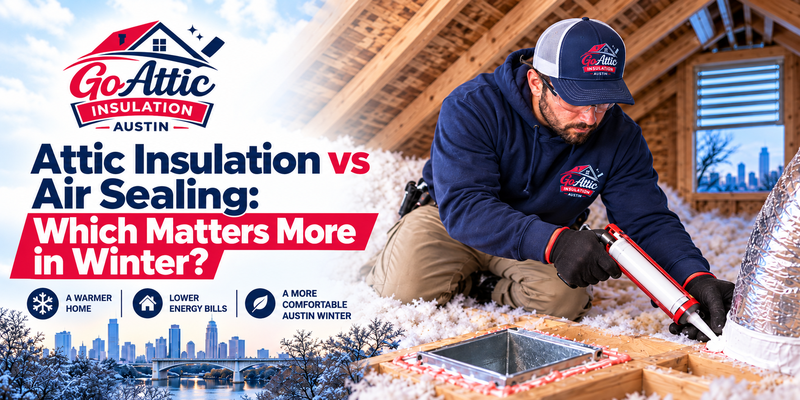
When winter arrives in Austin, TX, many homeowners start thinking about how to keep their homes warmer without overworking the heating system. Two of the most important improvements for winter comfort are attic insulation and air sealing. They often work together, but they solve different problems.
Attic insulation helps slow the movement of heat through your ceiling and roof, while air sealing helps stop unwanted air from leaking in and out of your home. If your attic has one problem but not the other, you may still experience cold rooms, drafts, high energy use, or inconsistent indoor temperatures.
So which matters more in winter? In many homes, the best answer is that air sealing and attic insulation are both important, but air sealing often needs to come first.
What Does Attic Insulation Do?
Attic insulation acts as a thermal barrier between your living space and the attic above it. During winter, heated indoor air naturally rises. Without enough insulation, a portion of that heat can escape through the ceiling and into the attic.
A properly insulated attic can help reduce heat loss and make it easier for your heating system to maintain a more consistent indoor temperature.
Insulation can also help improve year-round comfort. In summer, it helps reduce heat transfer from a hot attic into the rooms below. During winter, it helps keep more of the heat you are paying for inside the living area.
Common attic insulation materials include fiberglass, blown-in insulation, cellulose, and spray foam. The right option depends on the structure of the home, existing insulation, ventilation, and other attic conditions.
What Is Air Sealing?
Air sealing is the process of closing small gaps, cracks, holes, and penetrations that allow conditioned indoor air to escape and outdoor air to enter.
Many homes have hidden air leaks around attic access points, plumbing penetrations, electrical wiring, recessed lighting, ductwork, ceiling fixtures, wall top plates, and other openings.
These gaps may look small, but together they can create a significant amount of unwanted airflow.
During winter, heated indoor air can leak into the attic through these openings. At the same time, colder outdoor air may enter the home from other areas, creating drafts and forcing the heating system to work harder.
Air sealing helps reduce this uncontrolled airflow.
Why Air Sealing Can Matter More Than Adding Insulation Alone
A common mistake is adding more insulation without first addressing major air leaks.
Imagine wearing a thick winter jacket with the zipper completely open. The jacket provides insulation, but cold air can still move directly inside. Your attic can work the same way.
If warm air is escaping through gaps in the ceiling, adding more insulation may not fully solve the comfort problem.
Air sealing helps close the pathways where air is moving. Once those leaks are reduced, insulation can do a better job of slowing heat transfer.
For many Austin homes, this is why a professional attic evaluation should look at both the insulation level and potential air leakage instead of focusing on insulation alone.
Signs Your Home May Need Air Sealing
Some winter comfort problems are more closely related to air leakage than insulation.
Common signs include:
- Noticeable drafts around rooms or ceiling areas
- Cold spots near attic access doors
- Rooms that are difficult to keep warm
- Uneven temperatures between different parts of the house
- Heating equipment running more often than expected
- Dust entering through gaps or ceiling penetrations
- Existing insulation that looks adequate but comfort problems remain
These symptoms do not automatically mean air sealing is the only issue, but they can indicate that unwanted airflow is contributing to the problem.
Signs Your Attic May Need More Insulation
Insulation problems can also create noticeable winter comfort issues.
If insulation is thin, uneven, compressed, damaged, or missing in certain areas, heat may move through the ceiling more easily.
You may notice upstairs rooms cooling quickly after the heating system turns off or certain areas of the house feeling consistently colder than others.
Older homes may also have insulation levels that no longer meet current comfort expectations. In some cases, the insulation may have settled over time or been disturbed during electrical, HVAC, or remodeling work.
An attic inspection can help determine whether additional insulation may improve the home’s thermal performance.
Which Should Be Done First?
In many cases, air sealing should be completed before adding new attic insulation.
Once additional insulation is installed, some ceiling gaps and attic penetrations become harder to access. Sealing these openings first can help create a tighter building envelope before insulation is added or upgraded.
A practical sequence may include inspecting the attic, locating major air leaks, sealing appropriate gaps, checking ventilation and moisture conditions, and then improving insulation where needed.
This approach helps the two systems work together.
How Air Sealing and Insulation Work Together
The strongest winter performance usually comes from combining air sealing with properly installed attic insulation.
Air sealing helps reduce the movement of air through cracks and openings. Insulation helps slow the transfer of heat through building materials.
Together, they can help support more stable indoor temperatures and reduce the amount of work your HVAC system needs to do.
This can be especially valuable in Central Texas, where temperatures can change quickly. Austin homeowners may experience mild afternoons followed by colder nights or sudden cold fronts. A well-sealed and properly insulated attic helps the home respond more efficiently to these temperature swings.
Don’t Forget About Attic Ventilation
While reducing air leakage between the living space and attic is important, attic ventilation should still be evaluated properly.
Air sealing does not mean closing every opening in the attic. Ventilation systems are designed to allow appropriate airflow through designated intake and exhaust areas.
Blocking vents or sealing the wrong areas can create moisture and airflow problems.
That is why attic improvements should be planned carefully rather than simply applying sealant or insulation everywhere.
What Is Better for Winter Comfort?
If your attic has major air leaks, sealing those leaks may produce a noticeable improvement before additional insulation is installed.
If your attic is already relatively well sealed but does not have enough insulation, improving the insulation may be the more important next step.
In many homes, however, both issues exist at the same time.
The best approach is to evaluate the attic as a complete system instead of choosing insulation or air sealing without first understanding what is causing the problem.
Prepare Your Austin Home for Winter With Go Attic Insulation Austin
If your home feels drafty, rooms stay colder than expected, or your heating system seems to work harder during winter, your attic may need more than just additional insulation. Go Attic Insulation Austin provides professional attic insulation and air sealing services throughout Austin, TX, and surrounding areas. Our team can inspect your attic, identify insulation gaps and potential air leaks, and recommend the right improvements for your home. Contact Go Attic Insulation Austin to prepare your attic for winter and help create a more comfortable, energy-efficient home.