
Your attic insulation plays a critical role in keeping your home comfortable, energy efficient, and protected throughout the year. However, insulation does not last forever. Over time, exposure to moisture, pests, settling, and normal aging can reduce its effectiveness. Recognizing the signs of damaged or worn-out attic insulation can help you address problems early, improve your home’s energy performance, and avoid costly repairs.
Why Healthy Attic Insulation Matters
Attic insulation acts as a thermal barrier, reducing heat transfer between your living space and the outdoors. In Austin’s warm climate, properly functioning insulation helps keep conditioned air inside while reducing the workload on your heating and cooling system.
Well-maintained insulation helps provide:
- Lower energy bills.
- Improved indoor comfort.
- Better temperature consistency.
- Reduced HVAC wear and tear.
- Enhanced energy efficiency.
- Protection against excessive attic heat.
When insulation becomes damaged, these benefits gradually decrease.
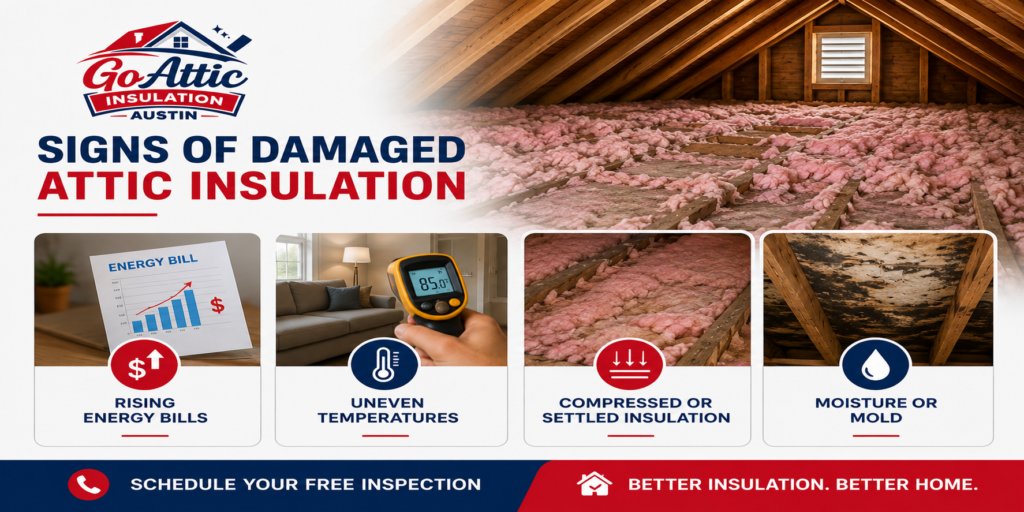
Rising Energy Bills
One of the earliest signs of failing attic insulation is a noticeable increase in heating or cooling costs. As insulation loses its thermal resistance, your HVAC system must work harder to maintain comfortable indoor temperatures.
If your utility bills continue rising without significant changes in weather or energy usage, deteriorating attic insulation could be one of the contributing factors.
Uneven Temperatures Throughout the Home
Do some rooms feel much warmer or cooler than others? Uneven indoor temperatures often indicate insulation problems.
Common symptoms include:
- Hot upstairs bedrooms.
- Cold spots during cooler months.
- Rooms that never seem comfortable.
- Temperature fluctuations throughout the day.
Proper attic insulation helps maintain a more consistent temperature across every room.
Insulation That Looks Compressed or Settled
Over time, many insulation materials naturally settle or become compressed. As insulation loses thickness, its R-value decreases, reducing its ability to resist heat flow.
During an attic inspection, you may notice:
- Thin insulation coverage.
- Low spots.
- Compressed fiberglass batts.
- Uneven insulation depth.
These conditions often indicate that insulation is no longer performing at its full potential.
Moisture Damage or Mold Growth
Moisture is one of the biggest threats to attic insulation. Roof leaks, poor ventilation, or high humidity can cause insulation to absorb moisture, reducing its effectiveness and increasing the risk of mold growth.
Signs of moisture-related damage include:
- Damp insulation.
- Water stains.
- Musty odors.
- Visible mold or mildew.
- Wet roof decking.
Addressing moisture problems quickly helps protect both your insulation and your home’s structure.
Pest or Rodent Activity
Rodents, birds, and insects can damage attic insulation by nesting, tunneling, or contaminating the material. Pest activity often leaves insulation flattened, displaced, or contaminated.
Watch for signs such as:
- Droppings.
- Nesting materials.
- Chewed insulation.
- Strange odors.
- Scratching noises in the attic.
If pests have affected your insulation, replacement may be necessary after the infestation has been resolved.
Excessive Dust Inside the Home
Damaged insulation often allows outside air and dust to enter your living space more easily. If you find yourself dusting furniture more frequently or notice poor indoor air quality, your attic insulation may no longer be sealing your home effectively.
A professional attic inspection can identify hidden air leaks and determine whether insulation upgrades are needed.
Your Home Feels Less Comfortable Than Before
Sometimes the signs are subtle. If your home simply feels harder to keep comfortable despite your HVAC system working properly, aging insulation may be responsible.
Many homeowners notice:
- Longer HVAC run times.
- Drafty rooms.
- Warm ceilings.
- Reduced comfort during extreme temperatures.
Replacing worn insulation can often restore the comfort your home once provided.
How Long Does Attic Insulation Last?
The lifespan of attic insulation depends on the material, installation quality, and environmental conditions. While many insulation products can last for decades, moisture, pests, settling, and physical damage can significantly shorten their effectiveness. Regular attic inspections help identify problems before they lead to major energy losses or costly repairs.
Why Professional Inspections Are Important
Many insulation problems are difficult to identify without entering the attic. A professional inspection evaluates insulation depth, condition, moisture levels, ventilation, and overall performance. This thorough assessment helps homeowners determine whether insulation can be improved with additional material or if a complete replacement is the better long-term solution.
Trust Go Attic Insulation Austin for Professional Insulation Services
If you’ve noticed signs of damaged or worn-out attic insulation, Go Attic Insulation Austin is here to help. We proudly serve homeowners throughout Austin, TX with professional attic insulation inspections, replacement, and installation services designed to improve comfort and energy efficiency. Our experienced team carefully evaluates your attic, identifies insulation issues, and recommends the best solution for your home’s unique needs.
Whether your insulation has settled, become damaged by moisture, or simply reached the end of its lifespan, you can count on Go Attic Insulation Austin for dependable workmanship and quality service. Contact us today to schedule your attic insulation inspection and keep your home comfortable and energy efficient year-round.